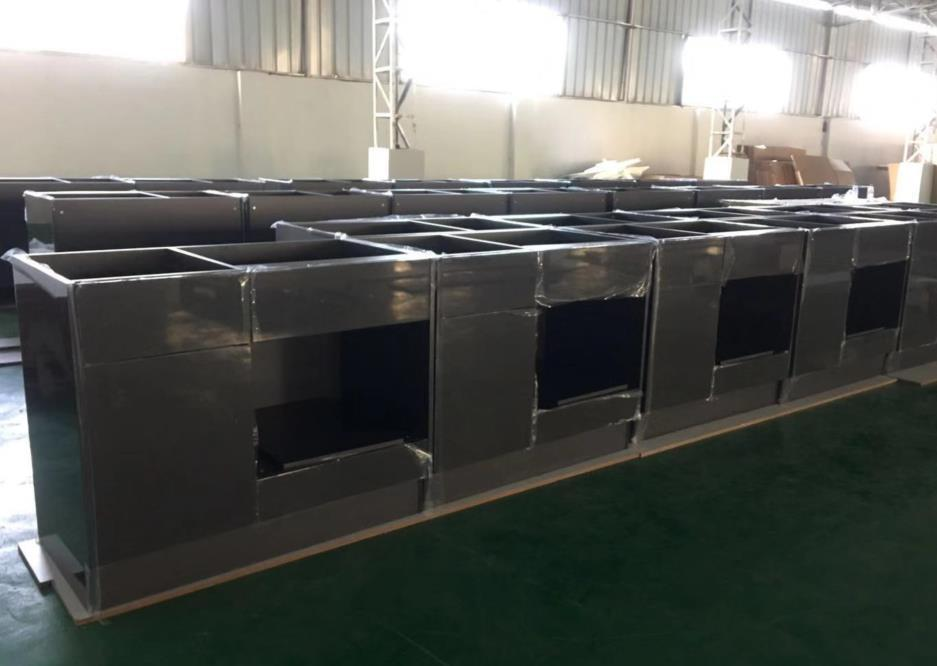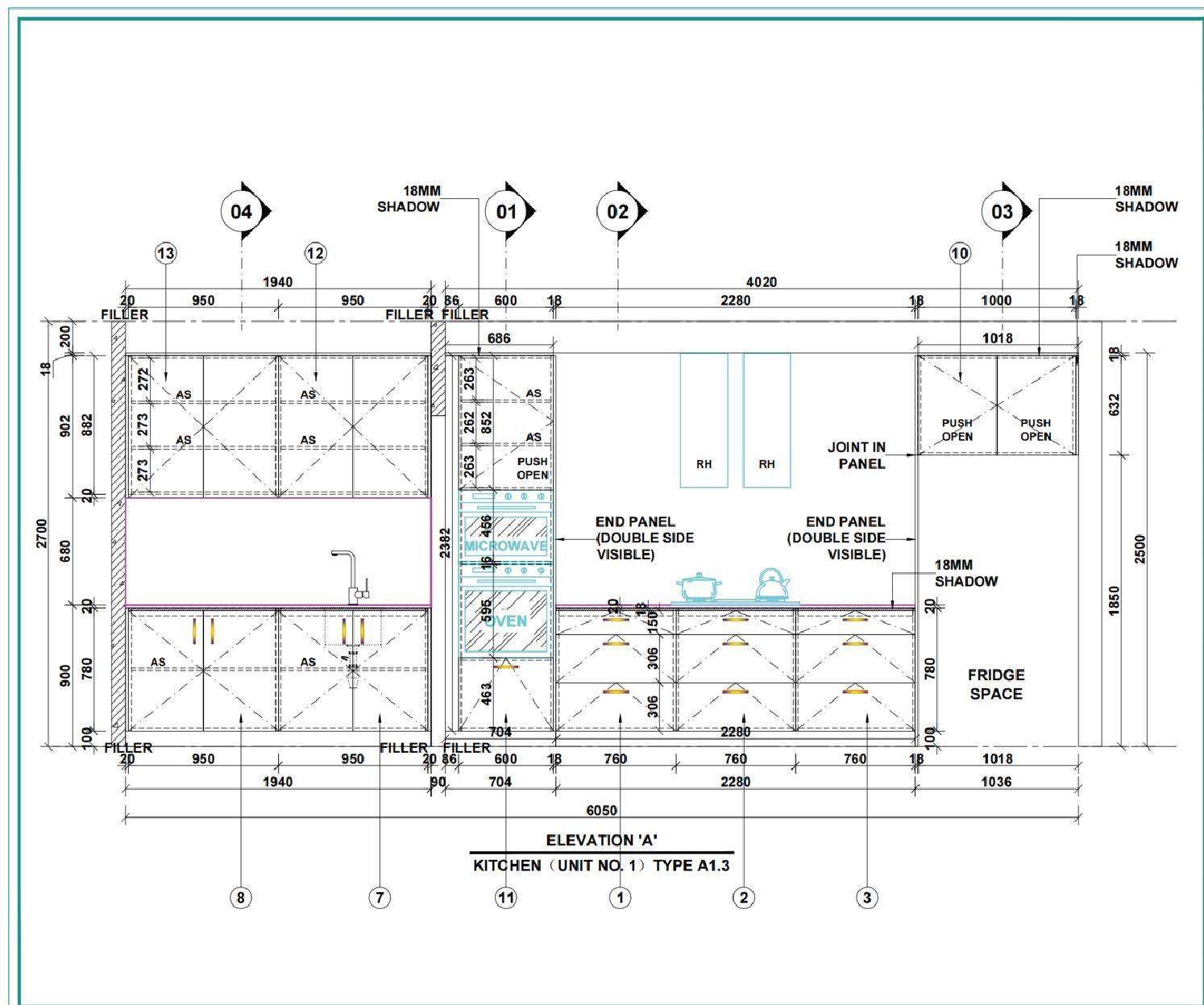
1. What do you need before requesting cabinet quotes?
Prepare a cabinet schedule, measured plans, appliance details, material references, quantities and destination. Mark every assumption or missing measurement so suppliers can explain what they can quote and what still needs confirmation.
When buying kitchen cabinets from China, start with the kitchen you need to deliver. Give each room, repeated layout and cabinet a stable reference. A drawing alone may leave quantities, accessories or delivery expectations unclear. A room-based schedule connects these decisions.
Build one brief that suppliers can follow
- Layout: wall dimensions, ceiling height, doors, windows and their opening directions.
- Interfaces: water, drainage, electrical points, ventilation and fixed obstacles.
- Appliances: actual model information and the relevant installation requirements.
- Cabinet specification: box, fronts, shelves, backs, finishes, edges and hardware on separate lines.
- Project scope: kitchen quantities, assembly condition, destination and intended installation arrangement.
Label dimensions as measured, assumed or awaiting site verification. Include units, a date and a drawing revision. The Cabinet Joint measurement guide is a useful example of recording openings and obstacles alongside room dimensions; your own site and appliance requirements still determine the final inputs.
Our cabinet drawing and measurement guide helps organise those records. Name who will verify the site and keep unresolved items in a short list with an owner and a decision point.
2. How do you compare suppliers and cabinet quotations?
Send the same brief to each supplier, identify who is selling and coordinating the order, and compare the same quantities, specifications and delivery scope. Separate missing items before deciding which total offers the better fit.
Ask who issues the quotation and sales documents, who answers technical questions, and who handles a proposed change or defect. A production business, a seller and a sourcing coordinator can have different roles. Record those roles against the actual offer rather than inferring them from a showroom or factory video.
Then use the same drawing revision, cabinet count, currency and named delivery point. The table below is a comparison method; it contains no assumed project prices.
| Compare | Record in each offer | If it is missing |
|---|---|---|
| Cabinet construction | Box, fronts, shelves, backs, materials and specified thicknesses | Request a written component specification |
| Finish and hardware | Sample codes, edge treatment, hinge and runner references | Keep substitutions and unconfirmed models visible |
| Included products | Worktops, sinks, fillers, plinths, accessories and appliances | Separate included, excluded and separately quoted items |
| Assembly and packing | RTA or assembled supply, loose parts, protection and labels | Clarify what the receiving and installation teams must do |
| Transport and services | Drawing or sample charges, agreed checks, freight and delivery boundary | Mark unresolved costs “awaiting quote” |
On smaller screens, swipe the table to read all columns.
For example, a cabinet-only offer cannot be compared directly with one including worktops and specified runners. Ask for the additional items separately, then compare the same coverage. A blank freight or destination-charge field means unresolved cost, not zero cost.
Put two cabinet quotes on the same basis
49 seconds · English · Captions available
Read the video key points
Use the same drawing revision, cabinet count, currency and named delivery point. List the cabinet box, door finish, hardware, packing and freight separately. Request omitted runner or freight prices before comparing totals. Keep unconfirmed destination charges on their own line. List worktops, sinks and appliances separately because they are not always in the cabinet total.
Use the cabinet quotation checklist to prepare your enquiry. For product selection, the kitchen cabinet collection provides the related starting point.
3. What must be approved before production starts?
Approve one coordinated set of drawings, component specifications, sample references and commercial terms. Name the authorised approver and identify which open items must be resolved before the agreed production release.
A finish name is only one entry in that record. Specify which component it covers and what the sample approval means: colour, sheen, grain direction, edge detail or another agreed feature. Keep the supplier code visible and compare physical samples under the lighting expected in the project.
Connect the accepted quotation to the cabinet schedule, drawing revision, finish sample and hardware list. Have the responsible designer or installer review appliance openings, service interfaces, fillers and fitting conditions within their agreed scope. Our sample approval guide explains how to retain the selection record.
Keep changes attached to the same record
If a finish, appliance or dimension changes, ask what else it affects. Record the revised price or timing where applicable, update the drawings and sample references, and obtain the necessary acceptance. Mark the previous version as superseded so different teams do not work from different instructions.
Foshan Bridge’s regular drawing services are charged according to project scope. Samples are paid; any credit towards a later order follows the agreed order terms. Confirm the fee, scope and credit arrangement before proceeding. The accepted approval pack should show what is approved, what remains open and who may authorise the next stage.
4. Who owns each decision and handover?
Assign a named preparer, approver and recipient to each handover, with a record that shows completion. Confirm these assignments in the relevant agreements; coordination alone does not establish who pays or who accepts the work.
For an overseas cabinet order, the most useful question is often “Who accepts this before the next team starts?” A drawing can be complete while site dimensions remain provisional. Goods can be packed while the receiving team still lacks the package list. Each handover needs its own acceptance point.
| Handover | Prepare or perform | Approve or receive | Keep this record |
|---|---|---|---|
| Site to design | Appointed measurer and design team | Named technical approver | Dimensions, units, revision and open items |
| Design to production | Seller or production party | Authorised buyer representative | Accepted specification, samples and release |
| Goods to shipment | Appointed checking party | Person authorised to accept or request correction | Findings, issue decisions and release instruction |
| Packages to transport | Appointed packing and dispatch parties | Receiving warehouse or carrier | Packing list, IDs, counts and condition |
| Delivery to installation | Appointed receiving and installation teams | Named project representative | Receipt, exceptions and closeout list |
On smaller screens, swipe the table to read all columns.
Add a cost owner and the required decision date to your working copy. Name who may pause a handover if the documents or goods do not match, and how the issue reaches the approver. For repeated kitchens, carry the room or unit reference through the schedule and packing list.
Foshan Bridge provides sourcing and trade supply. Any supplier communication, checking or shipping coordination belongs within the accepted project scope. Our project procurement support explains that discussion; it does not replace the responsibilities agreed with the seller, carrier or installer.
5. What should you check before the cartons are sealed?
Agree the checking scope and acceptance basis in advance, then connect the checked cabinet, loose parts and packaging to the same item and room references. Record exceptions and the agreed response before shipment release.
Start with the accepted order, drawings, samples and hardware list. Specify which quantities, dimensions, visible finishes and functions will be checked, how coverage is selected, and what evidence will be returned. A photograph can show an identified visible condition; a dimension needs a measurement, and a performance claim needs the relevant evidence.
Our cabinet and furniture inspection checklist helps organise the record. Foshan Bridge can provide relevant photographs; whether an inspection report is required and provided is agreed with the customer. Clarify this before the checking stage.
Make the packing list usable at the destination
- Link each cabinet and loose component to a room or unit, drawing revision and carton number.
- Identify hardware bags and show where they will be packed.
- Agree protection for exposed edges, corners and separate surfaces.
- Keep package counts, packed dimensions and weights consistent with the final packing list.
- Log an issue with its item ID, evidence, action owner, decision and follow-up result.
If the required protection is not visible, ask for the relevant view and record the response. Do not turn a missing photograph into an assumed pass. Release the goods through the agreed acceptance and payment process, then send the final package information to the receiving team.
6. What must be agreed for shipping and importing?
Confirm the trade term, precise named port or place, transport scope, destination responsibilities and unresolved charges. Have the appointed forwarder and destination broker confirm the documents required for the actual goods and route.
Keep goods, export services, transport and destination work identifiable in your cost plan. Ask who books the shipment, arranges any agreed insurance, provides shipment information, handles import clearance and organises local delivery. Confirm where the quoted service ends.
ICC’s Incoterms® 2020 guidance explains how the rules allocate obligations, costs and risk. Record the selected rule, named location and version. Keep the product specification, payment milestones and service agreements documented alongside it.
Ask the broker and carrier which commercial invoice, packing list, transport document and product or destination records they need, who prepares each one, and when it must be checked. This is a preparation discussion, not a universal customs-document list. Import requirements and charges depend on the goods and destination.
Use our shipping information checklist to organise package counts, dimensions, weights, collection points and delivery details. Keep an unquoted charge open until confirmed. Build the project programme from current production and transport estimates, with the relevant parties confirming their assumptions; this global guide gives no fixed arrival time or duty rate.
7. How do you prepare for delivery and installation?
Arrange receiving, unloading, storage and installation before dispatch. Give the destination team the current drawings and package list, confirm site access, and agree how shortages, damage or installation mismatches will be recorded and resolved.
Confirm the delivery boundary with the transport provider. Then ask the parties carrying out unloading and installation about access, equipment, carrying routes, storage conditions and site readiness. Reconcile appliance and plumbing information with the installer before the cabinets arrive.
At receipt, count packages against the packing list and record visible condition by package ID. Follow the agreed notification process and applicable deadlines for exceptions. Keep photographs and delivery records so the relevant parties can identify what happened and respond.
During installation, use the accepted drawing revision. If a cabinet, opening or service point does not match, record the discrepancy before an alteration is authorised. Keep an issue list with an owner, agreed action, follow-up result and acceptance status. Do not let an on-site change silently replace an approved specification.
Foshan Bridge can discuss paid installation arrangements. Location, scope, availability and fees must be confirmed for the project alongside supply and delivery. The receiving and installation teams should know who answers technical questions and who accepts completed work.
Before you commit to the order
Check that you can identify the current specification, accepted quote, approval owner, checking scope, package plan and destination responsibilities. If one is missing, give the open item a name and a decision point.
Conclusion
Keep one current specification, compare the same scope, and assign every approval and handover. Send your plans, quantities and destination to discuss the next step.