
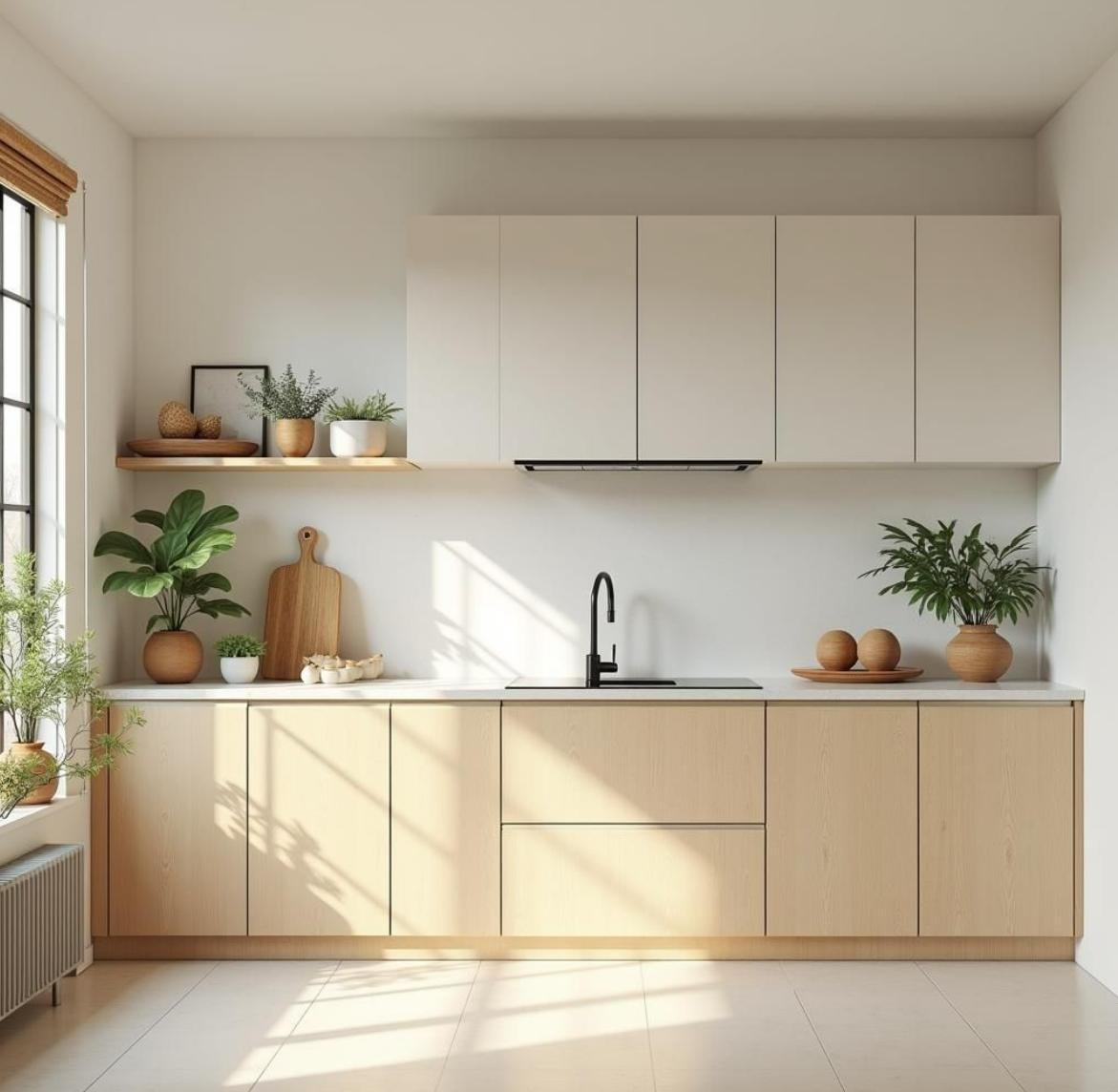
Modern Maple Kitchen Cabinets
The original maple veneer design shows a light wood tone beside a plain worktop and open storage.

MAPLE GRAIN, HONEY TONES & FRAMED FRONTS
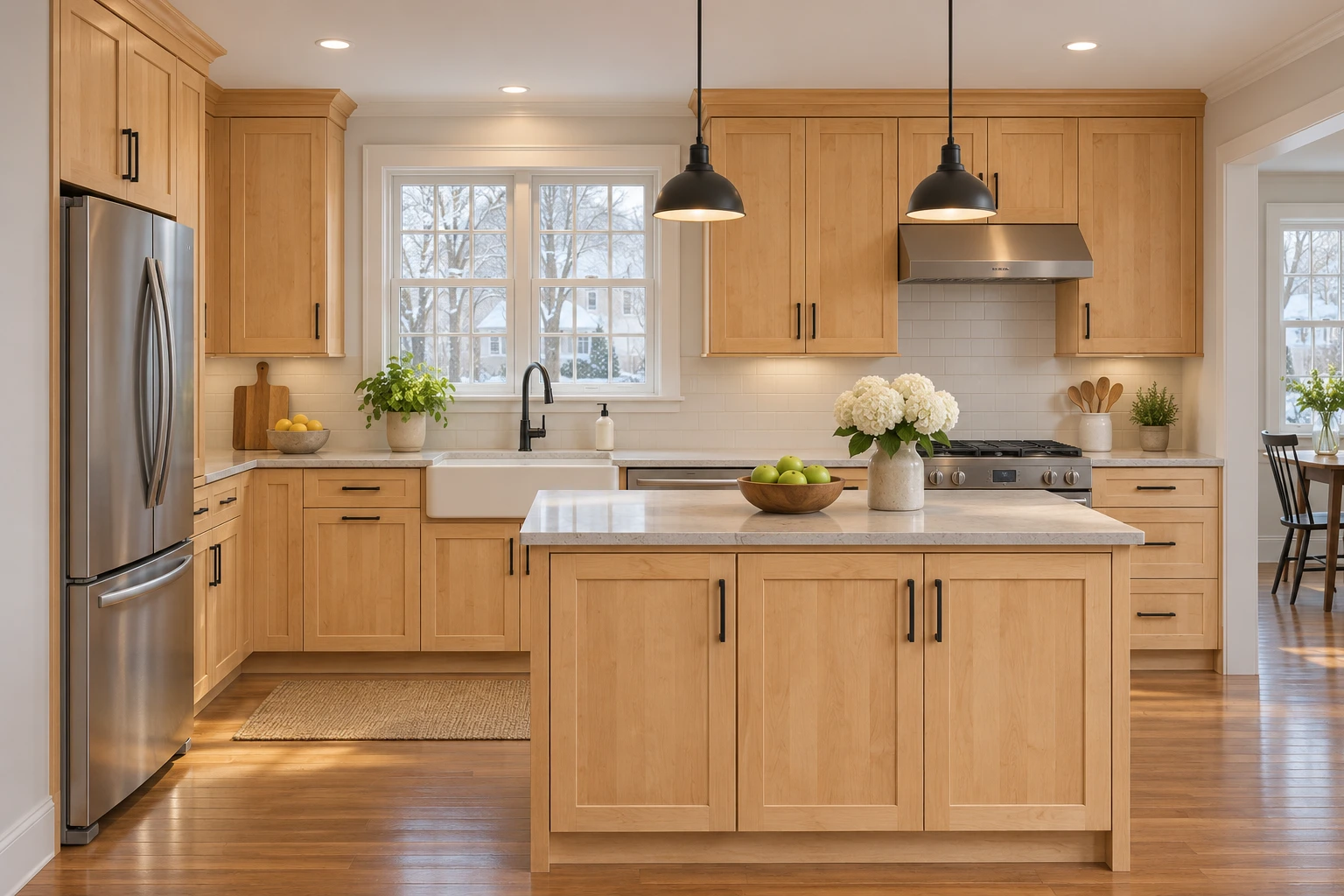
Maple kitchen cabinets can be planned with natural, honey, light or stained finishes and modern or Shaker fronts. Confirm the timber components and finish sample together, with the cabinet box specification listed separately.
02 / Collection Overview
Start with maple species, visible grain, coating and any matching solid or veneered parts. Compare the cabinet runs and finishes below, then use a measured plan to assign surfaces, openings and fittings to the correct parts.
Discuss Your Cabinet Specification03 / Kitchen Cabinet Designs
Compare eight kitchen designs by finish, cabinet fronts and layout. Open a design to see its details or use it to prepare your project brief.
The original maple veneer design shows a light wood tone beside a plain worktop and open storage.
Compare this kitchen design for maple species, visible grain, coating and any matching solid or veneered parts. Confirm the cabinet materials and finish samples before ordering.
Use a restrained frame and centre-panel proportion across the run. Check the door construction and the full-width drawer fronts on an elevation.
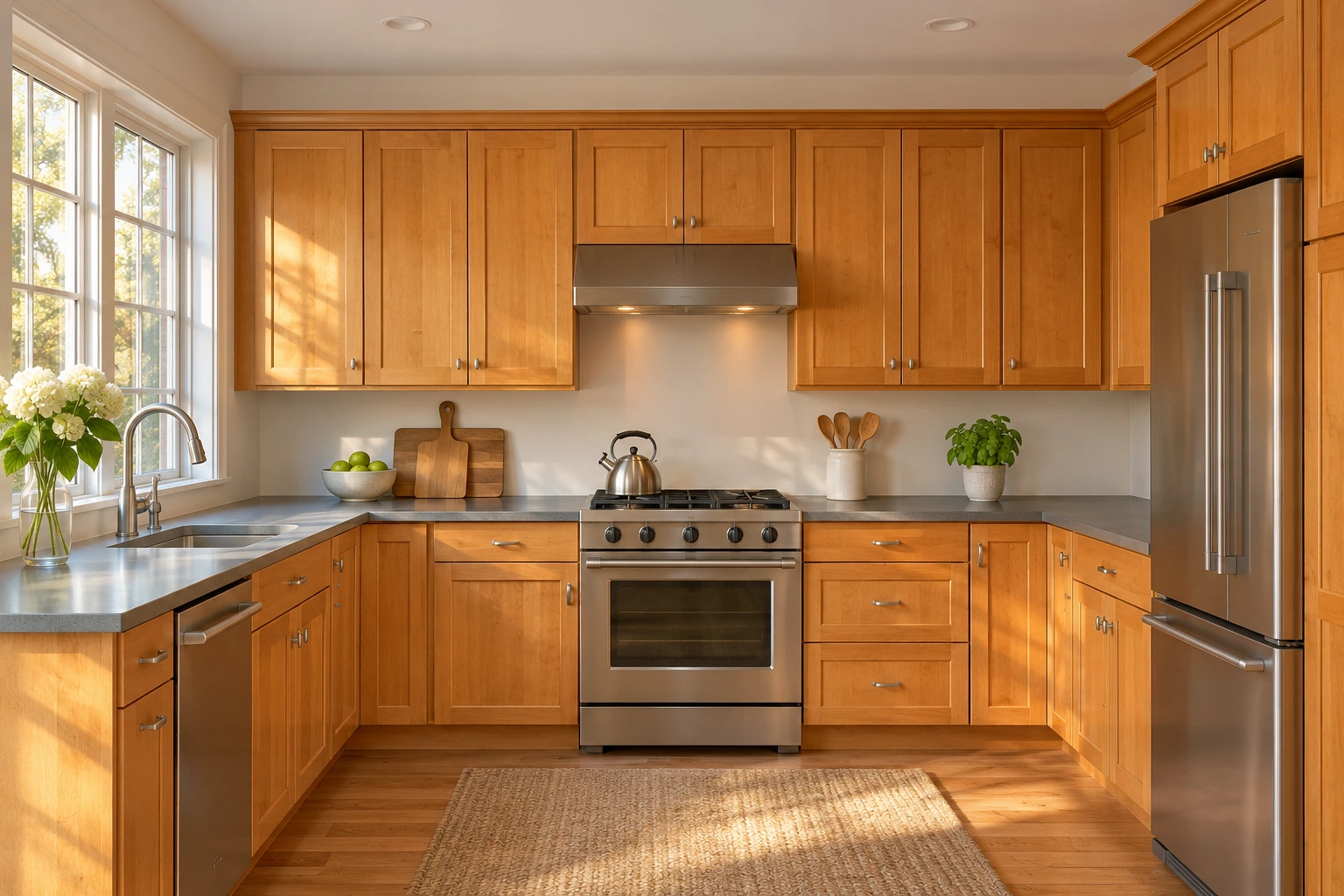
Compare this kitchen design for maple species, visible grain, coating and any matching solid or veneered parts. Confirm the cabinet materials and finish samples before ordering.
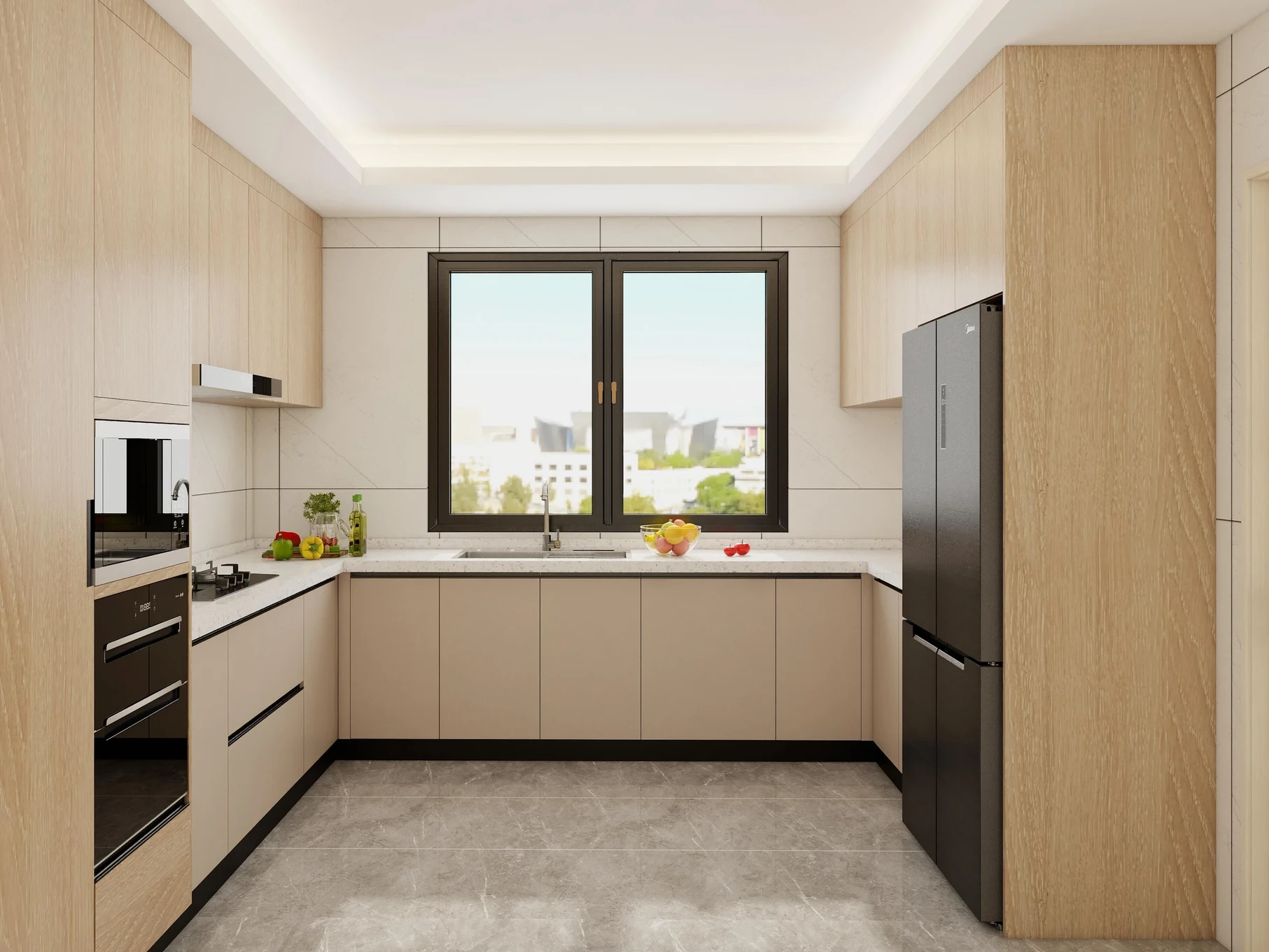
A light timber tone carries around a compact cabinet layout. Compare it with an approved light maple sample beside the worktop and appliances.
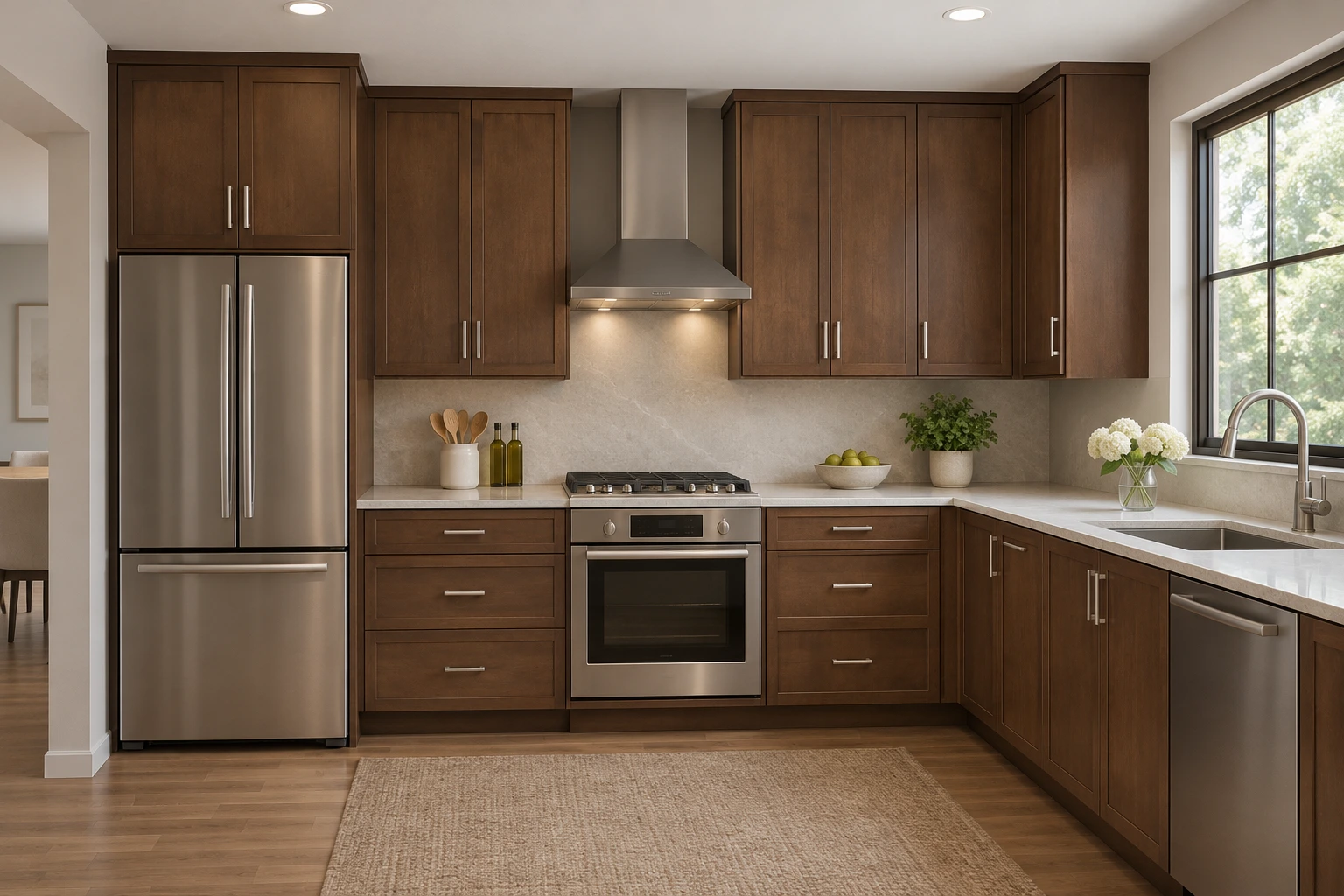
Compare this kitchen design for maple species, visible grain, coating and any matching solid or veneered parts. Confirm the cabinet materials and finish samples before ordering.
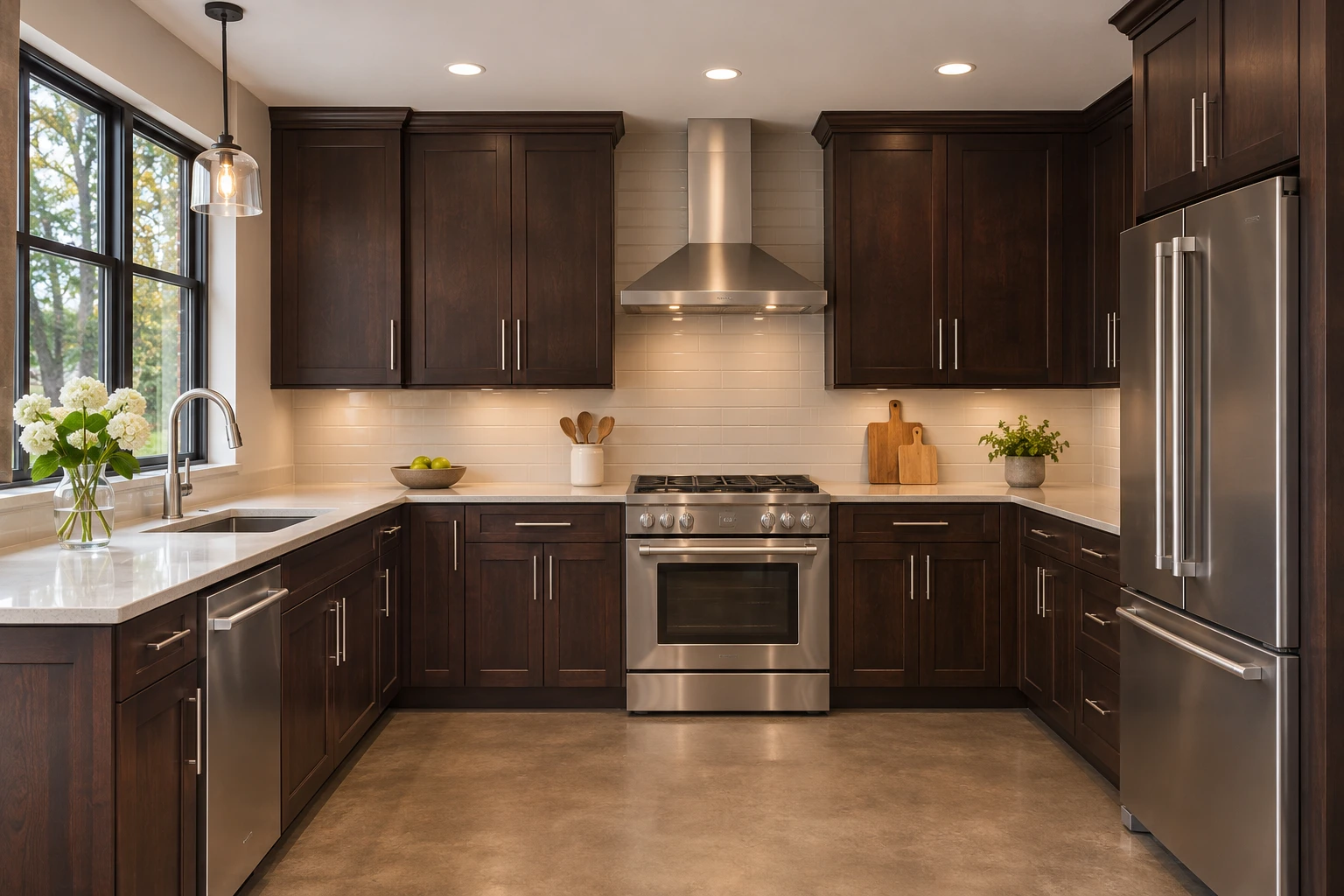
Compare this kitchen design for maple species, visible grain, coating and any matching solid or veneered parts. Confirm the cabinet materials and finish samples before ordering.
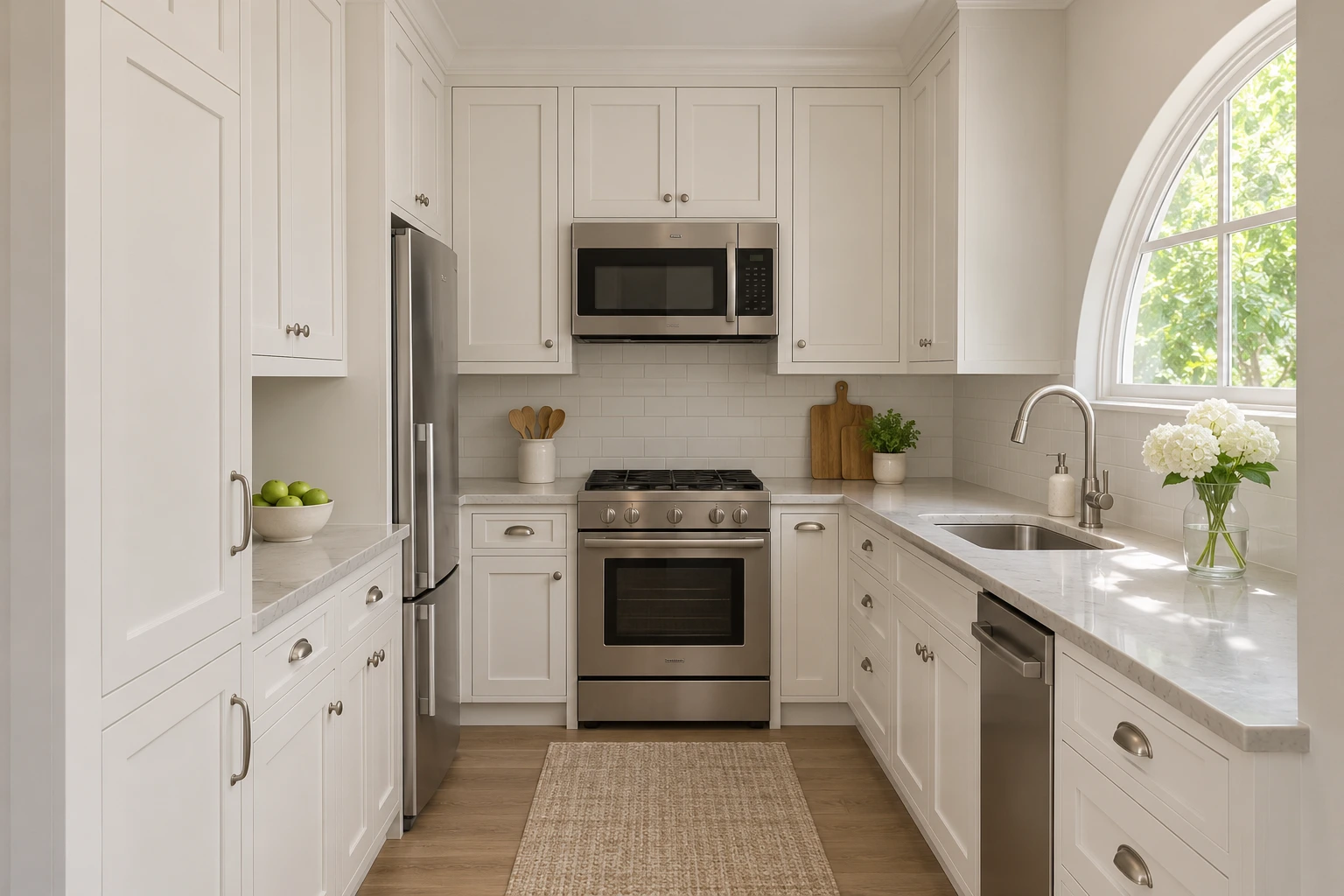
Compare this kitchen design for maple species, visible grain, coating and any matching solid or veneered parts. Confirm the cabinet materials and finish samples before ordering.
Compare related door styles, materials and finishes before you settle on the cabinet specification.

Compare stainless steel kitchen cabinets by layout, front construction and finish.
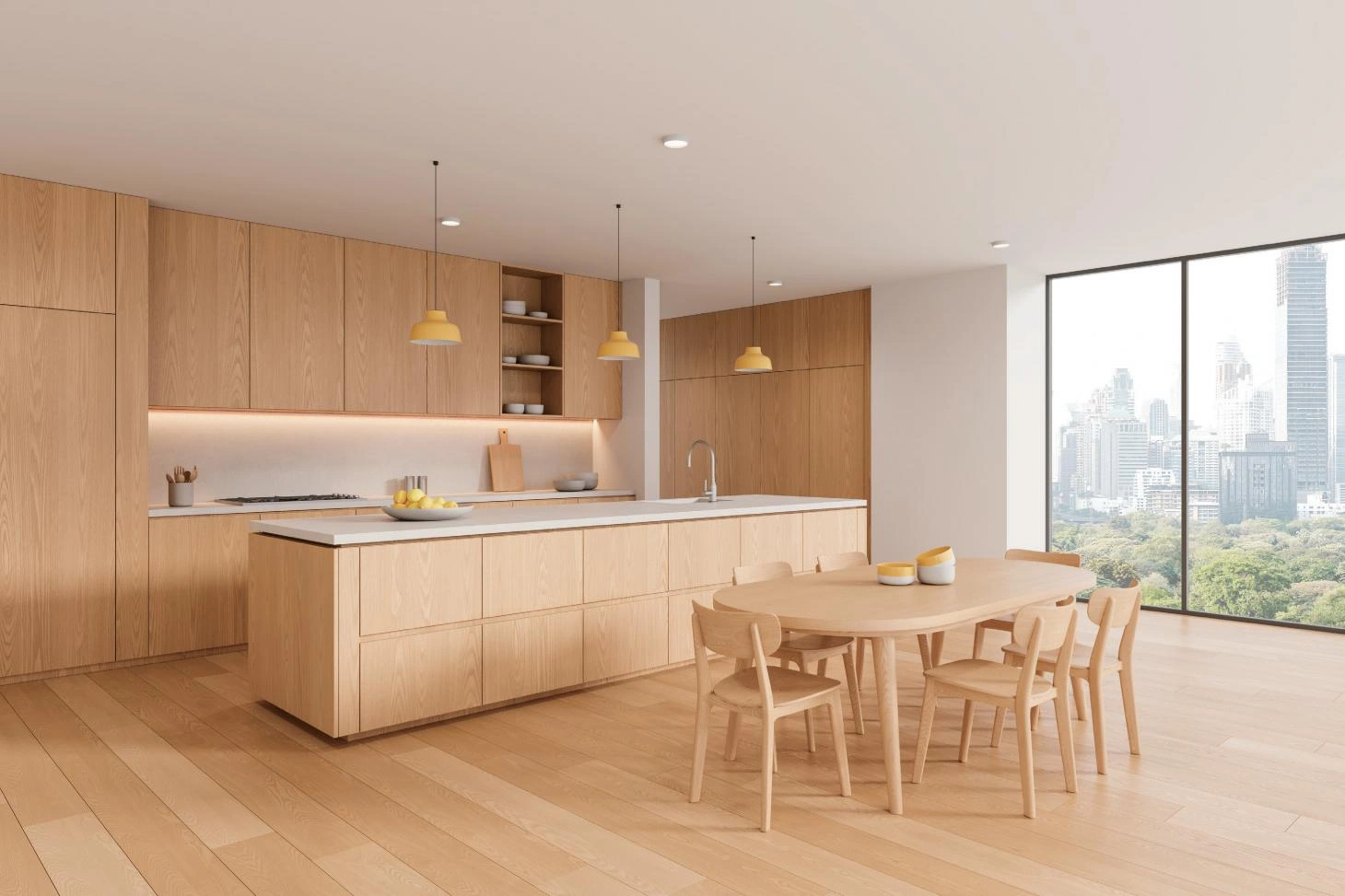
Compare white oak kitchen cabinets by layout, front construction and finish.

Compare oak kitchen cabinets by layout, front construction and finish.
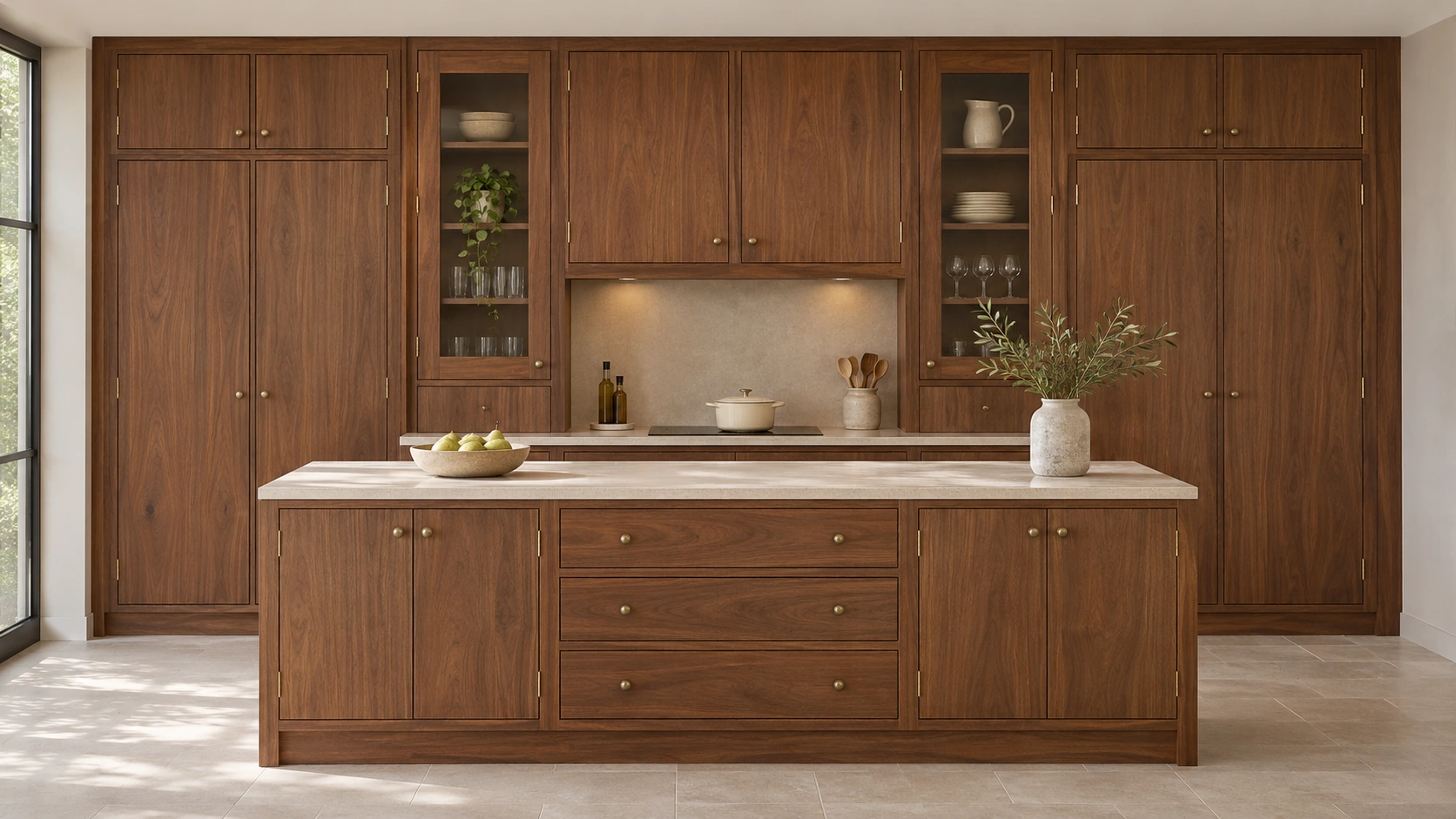
Compare walnut kitchen cabinets by layout, front construction and finish.

Compare solid wood kitchen cabinets by layout, front construction and finish.
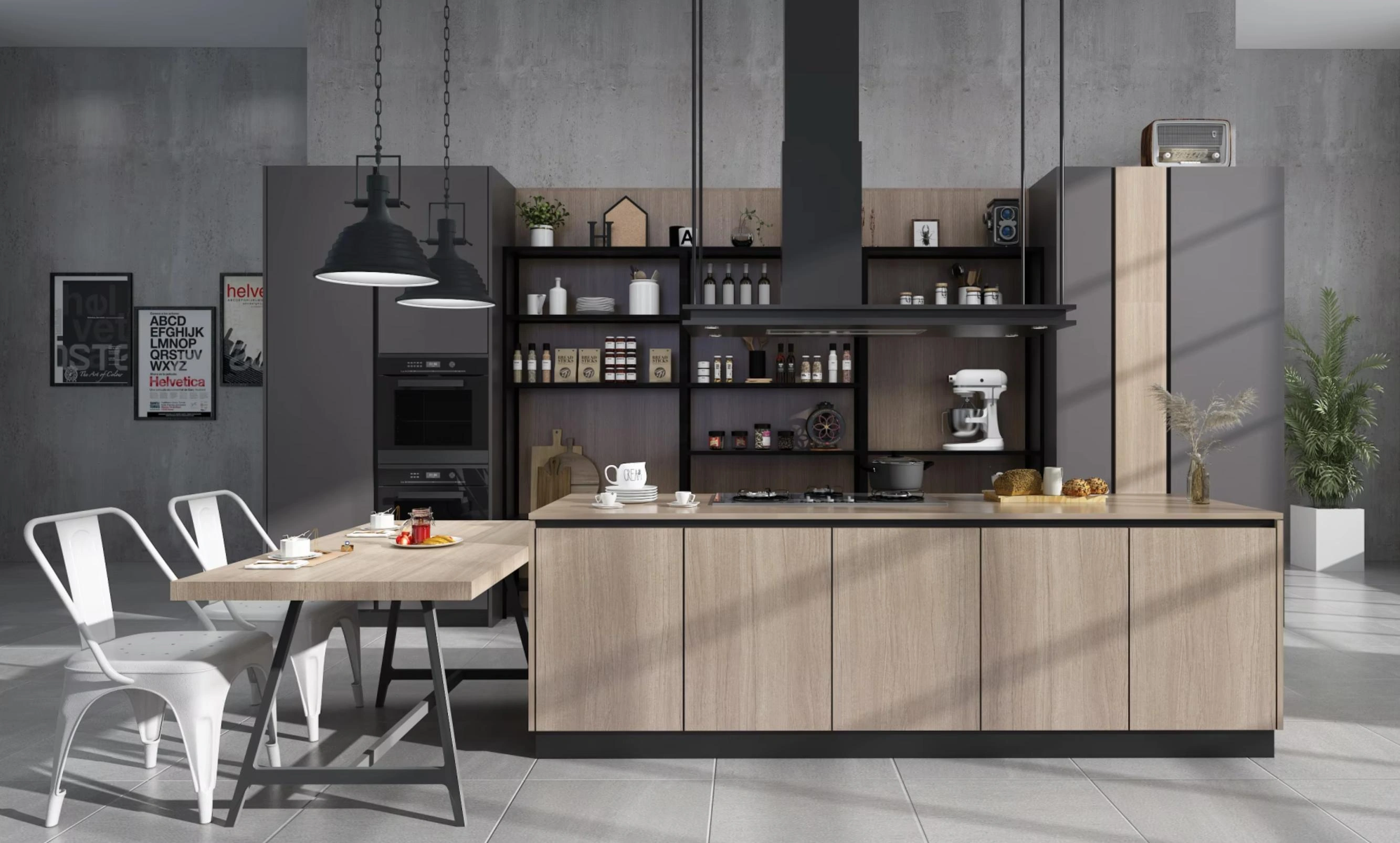
Compare plywood kitchen cabinets by layout, front construction and finish.

Compare bamboo kitchen cabinets by layout, front construction and finish.

Compare aluminum kitchen cabinets by layout, front construction and finish.
05 / Configuration
Add the finishes, profiles, fittings and storage to include in your brief.
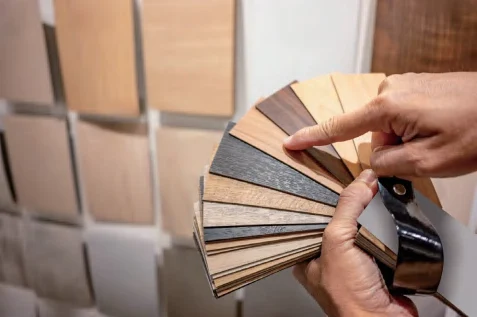
Approve actual maple or maple veneer with a sample showing face, edge and selected stain. Confirm species for each visible part.
Compare a pale or honey finish and simple flat or Shaker fronts on full-sized samples. Identify any painted areas separately.

Check the hinge fixing detail against the cabinet material. Compare handle colour beside the approved maple and worktop samples.
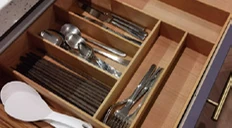
Mark which shelves, drawer fronts and exposed pantry ends must match the door tone. List hidden cabinet structures independently.
06 / Integration
Keep visible grain transitions intentional around ovens, integrated fridges and tall doors. Make service access clear on the elevations.

Keep visible grain transitions intentional around ovens, integrated fridges and tall doors. Make service access clear on the elevations.

Decide which doors, worktops or displays need lighting. Document switch, driver and cable access next to the cabinet openings.

Place bins and pull-outs where the storage plan needs them. Check operating clearance, hinges and access to fittings after installation.

Confirm the push latch, hinges and opening gap on the approved front. Record which cabinet doors or drawers should use touch opening.
07 / Ordering
Keep the approved cabinet schedule, drawing revision and finish samples together from the first brief to packing.

Send measured rooms, the cabinet layout you prefer and maple species, visible grain, coating and any matching solid or veneered parts.

Check the individual cabinet groups, visible panels and separate items against the finish and component schedule.

Review elevations, cabinet widths, appliance clearances and the finish breaks in the room.

Approve the drawing revision, signed samples, scope and order documents together.
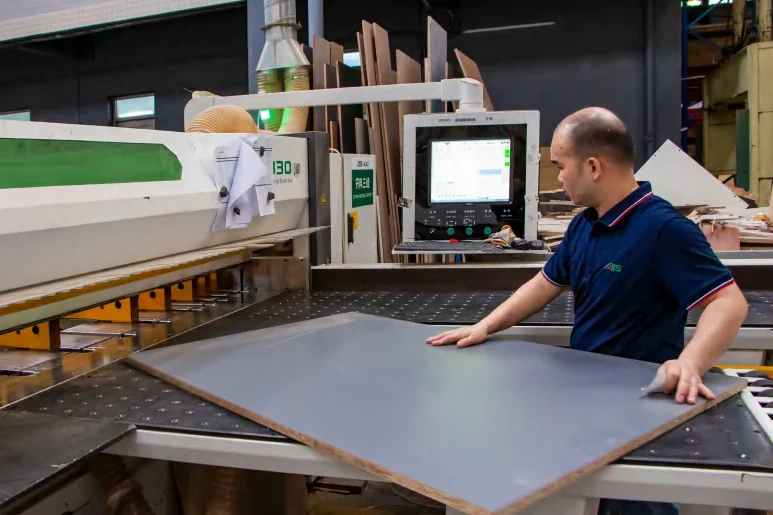
Confirm the finish, packing list and protection for visible fronts, fittings and loose panels.

Match the numbered packing list to the cabinet schedule and agree the delivery arrangements.
08 / Project enquiry
Choose a design and mark the options to include. Add your measured plan, reference samples or equipment models before discussing a quotation.
Project questions
Use the questions below to check the cabinet schedule and the details needed for pricing.
Either is possible. Identify the frame, panel and drawer-front material separately, and approve the edge of the selected maple or veneer.
A natural finish emphasises the lighter timber, while a honey tone adds warmth. Compare actual finished samples next to the worktop.
Yes. Ask the supplier for the proposed stain or paint and view it on the selected door structure before the room is specified.
Approve labelled samples for the expected colour and grain range. Match the approved reference against the full material schedule and visible sides.