

Modern Walnut Kitchen Cabinets
Warm walnut-tone vertical grain continues across the appliance wall beside a dark island. Confirm the species and how the grain should run through adjoining fronts.
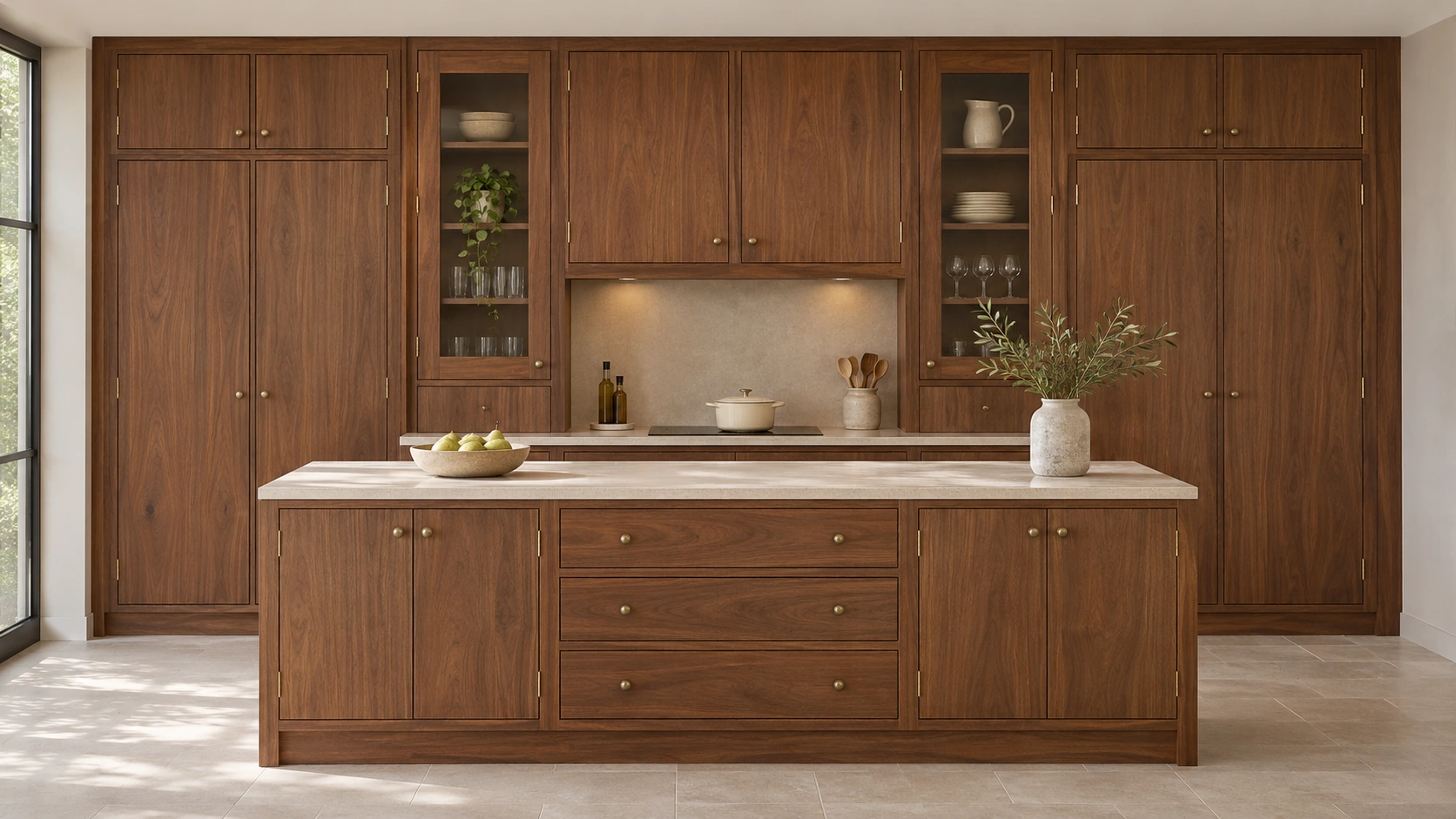
WALNUT GRAIN, STAIN & CABINET CONSTRUCTION
Walnut kitchen cabinets offer natural, light and dark directions with modern or Shaker fronts. Confirm the timber species, solid-wood or veneer components and finish sample before assigning materials to the cabinet schedule.

02 / Collection Overview
Start with walnut species, veneer selection, grain matching and the intended stain. Compare the cabinet runs and finishes below, then use a measured plan to assign surfaces, openings and fittings to the correct parts.
Discuss Your Cabinet Specification03 / Kitchen Cabinet Designs
Compare eight kitchen designs by finish, cabinet fronts and layout. Open a design to see its details or use it to prepare your project brief.
Warm walnut-tone vertical grain continues across the appliance wall beside a dark island. Confirm the species and how the grain should run through adjoining fronts.
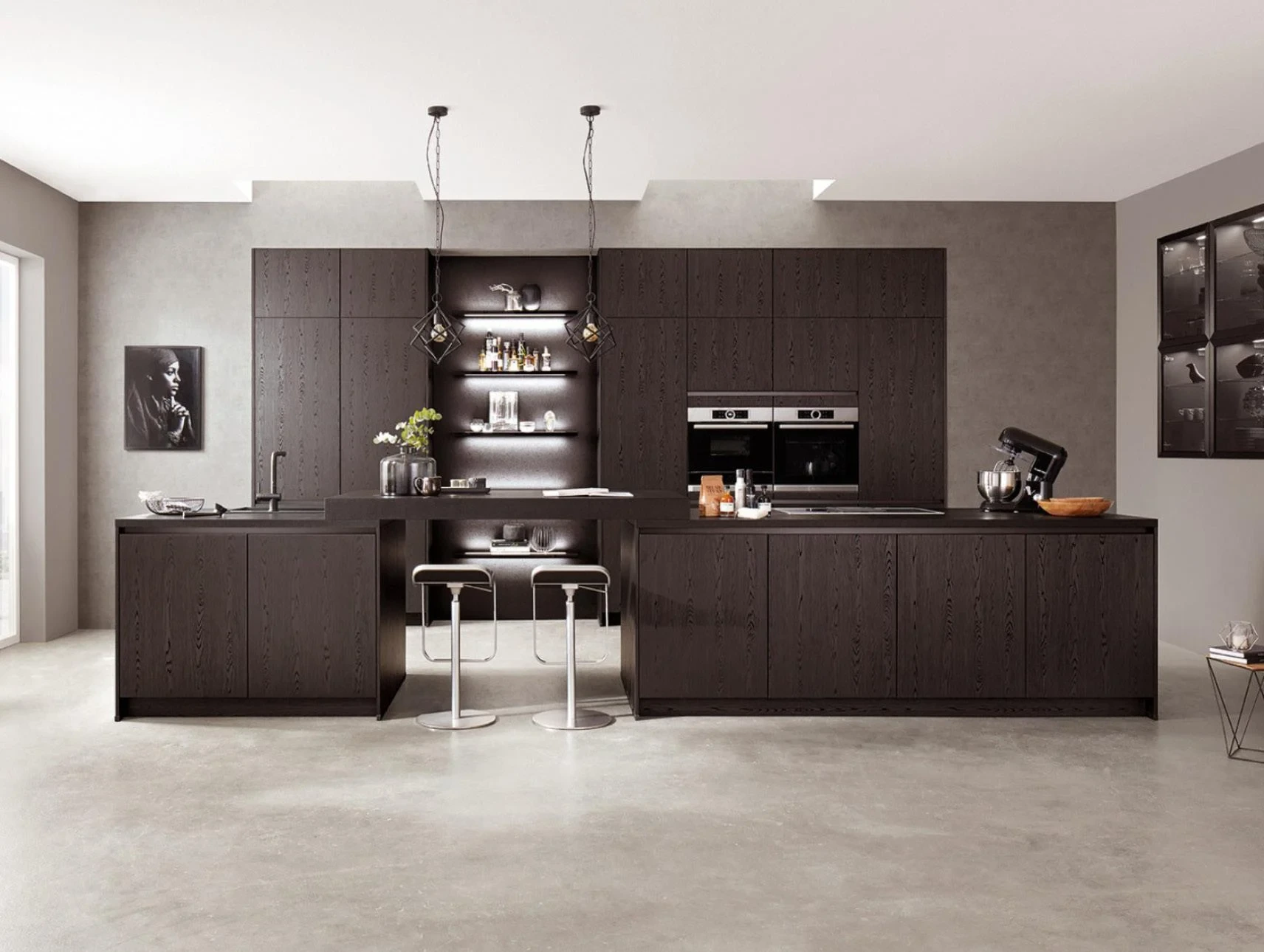
Dark walnut tones frame two sets of tall units and an open central shelf. Compare how the finish reads against pale flooring.
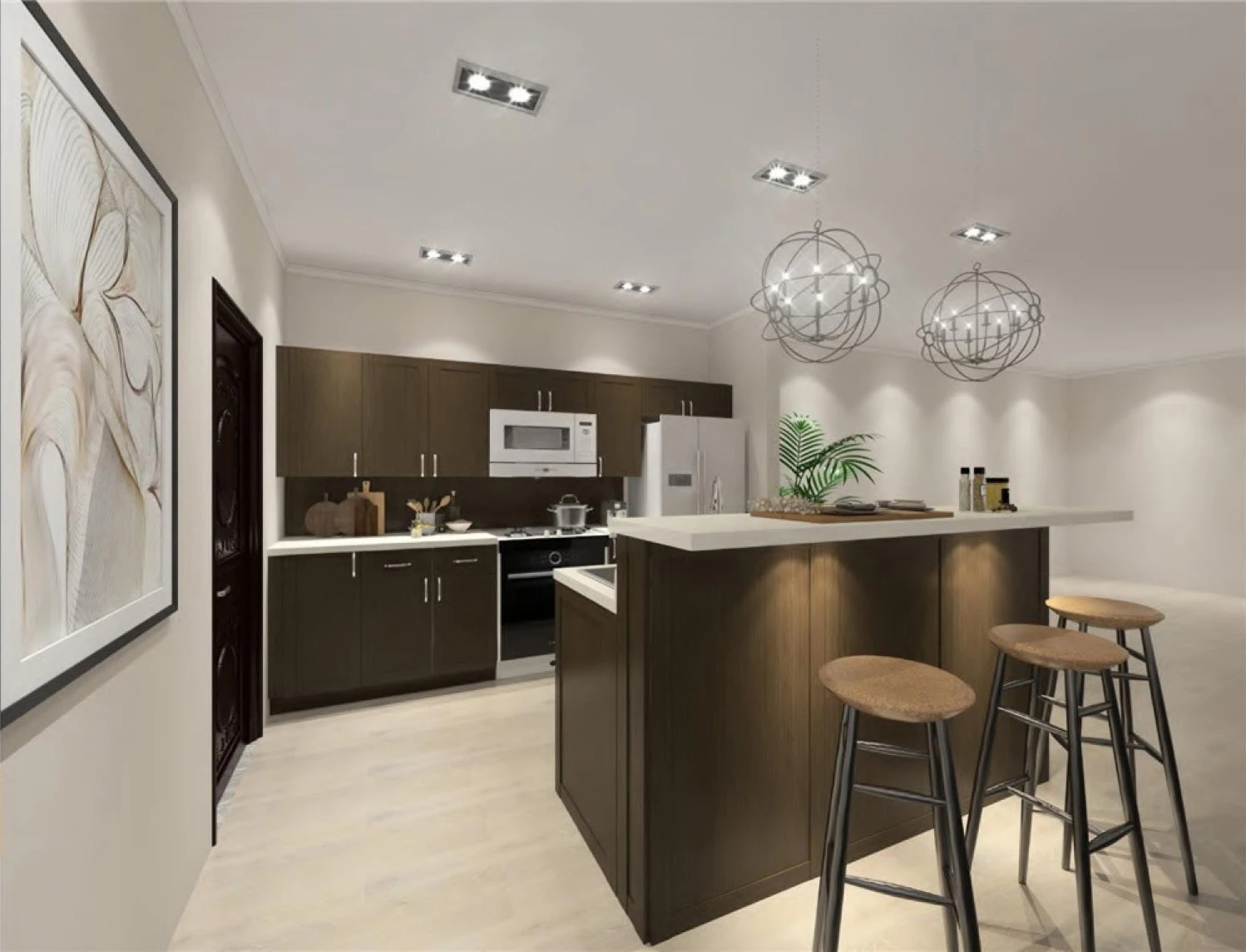
Walnut-tone framed cabinet doors run around the kitchen and island. Compare the rail proportions and the sample finish in daylight.

Compare this kitchen design for walnut species, veneer selection, grain matching and the intended stain. Confirm the cabinet materials and finish samples before ordering.
Walnut-tone inset fronts and a tall storage wall show the cabinetry proportions. Confirm walnut species by component.

The warm brown finish shows variation across exposed framed fronts. Ask to see a natural walnut sample and confirm each part's construction.
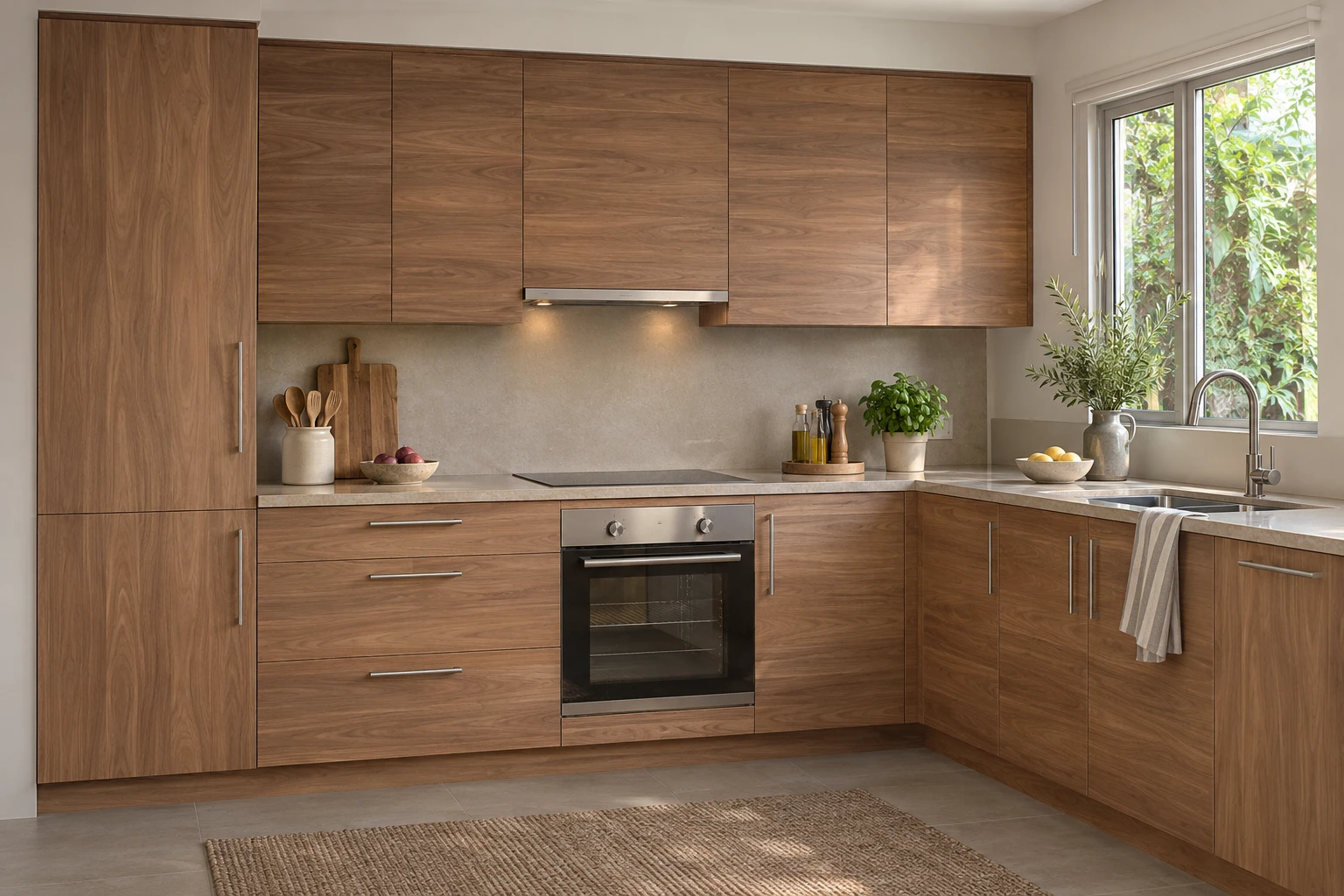
Compare this kitchen design for walnut species, veneer selection, grain matching and the intended stain. Confirm the cabinet materials and finish samples before ordering.
Dark walnut veneer lines a galley with opposing work runs and a pale counter.
Compare related door styles, materials and finishes before you settle on the cabinet specification.

Compare stainless steel kitchen cabinets by layout, front construction and finish.
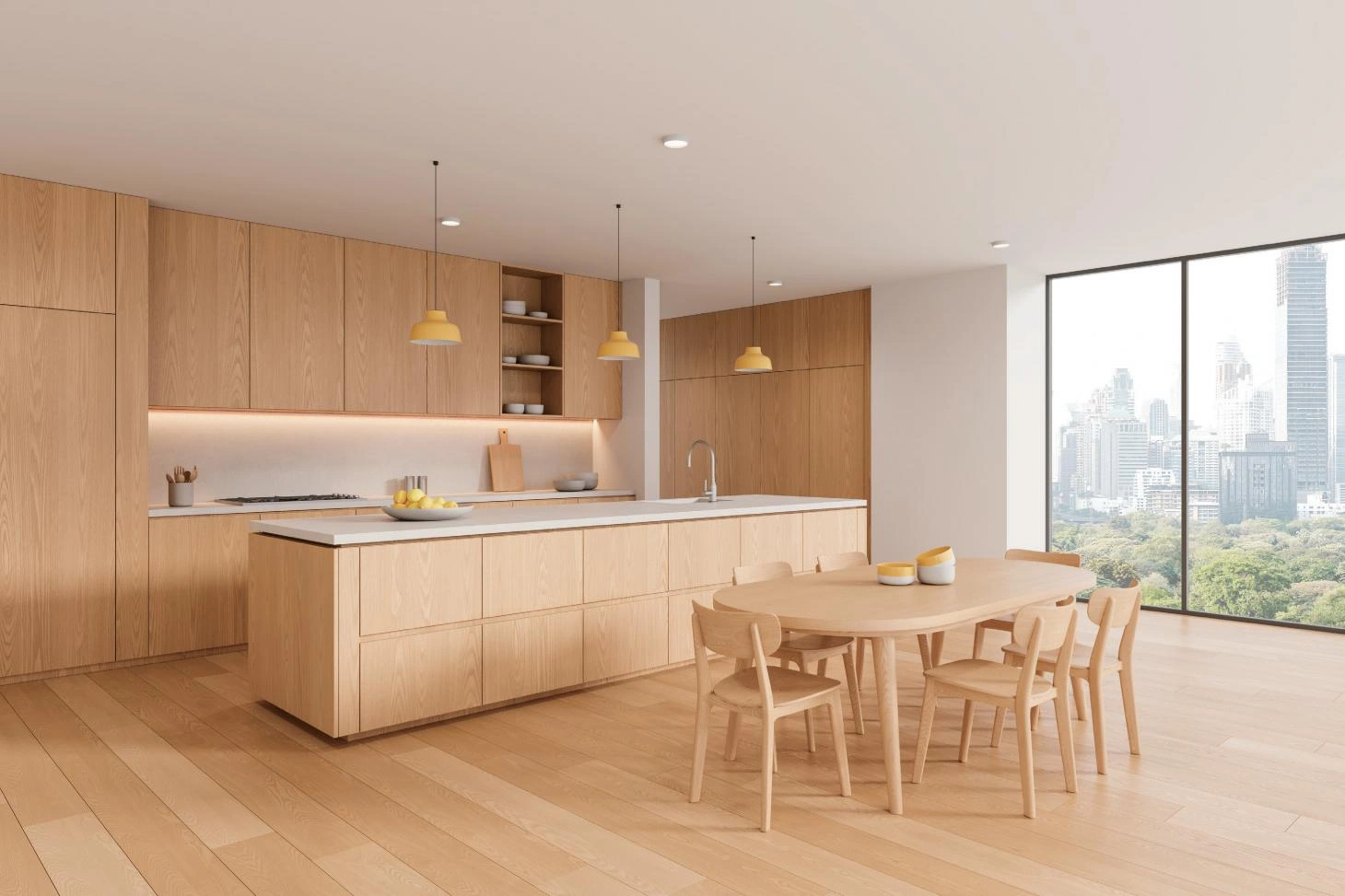
Compare white oak kitchen cabinets by layout, front construction and finish.

Compare oak kitchen cabinets by layout, front construction and finish.

Compare solid wood kitchen cabinets by layout, front construction and finish.
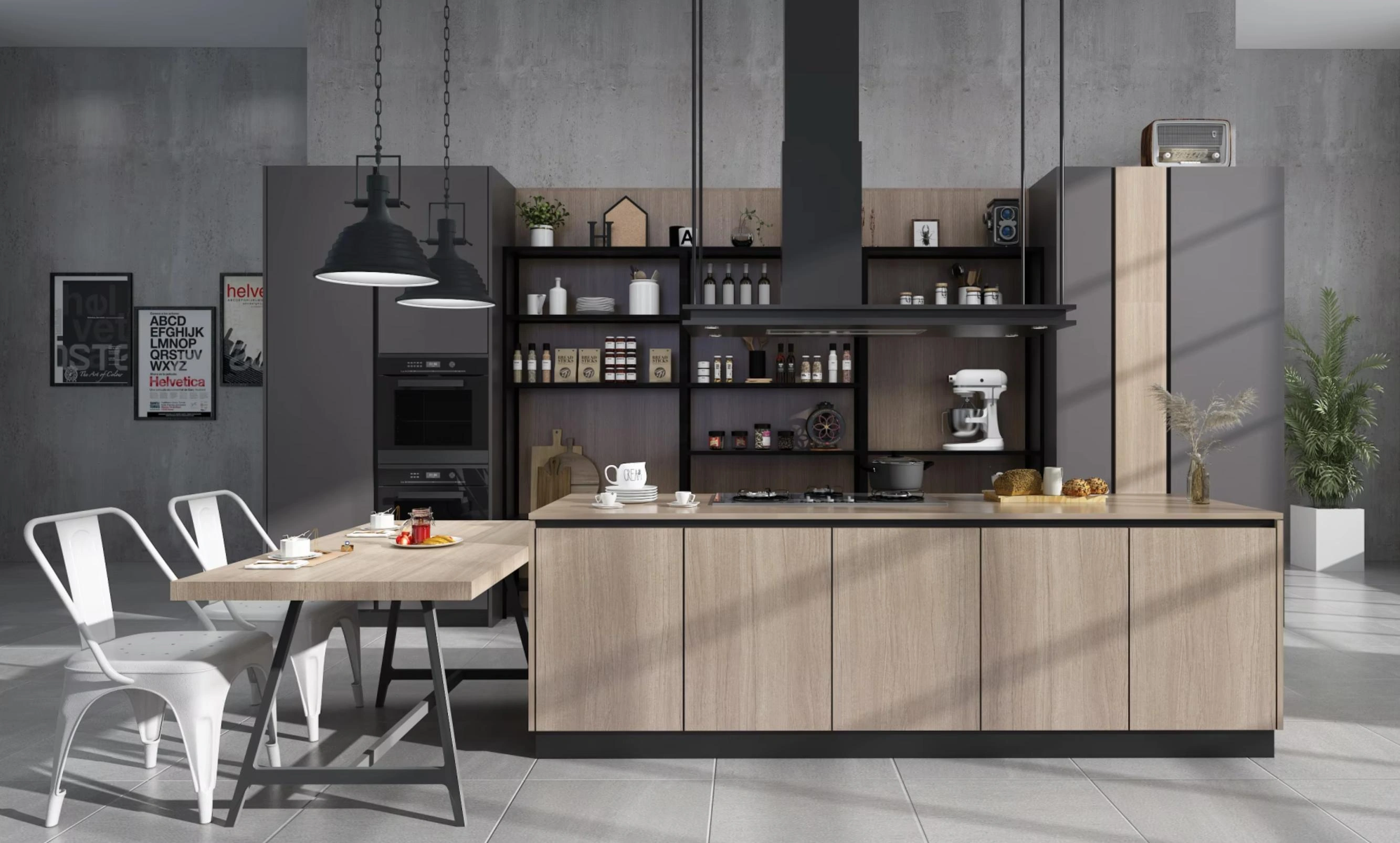
Compare plywood kitchen cabinets by layout, front construction and finish.

Compare maple kitchen cabinets by layout, front construction and finish.

Compare bamboo kitchen cabinets by layout, front construction and finish.

Compare aluminum kitchen cabinets by layout, front construction and finish.
05 / Configuration
Add the finishes, profiles, fittings and storage to include in your brief.
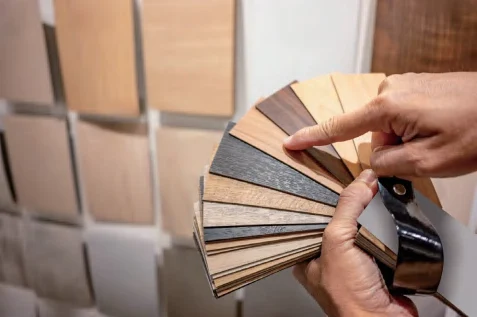
Confirm the species and whether the selected components are solid timber or veneer. Approve stain, sheen and the matching grain direction on a sample set.
Compare modern flat-panel fronts with framed doors. On wide tall units, review where the grain should continue from one door to the next.

Check fixing suitability against the hinge plate and door build. Choose the pull finish beside the warmed or darkened grain.
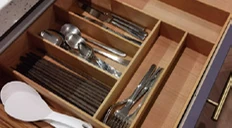
List drawer fronts, pantry ends and dividers separately so the visible timber tone stays consistent on the main elevation.
06 / Integration
Map grain around continuous tall-unit panels and appliances. Confirm the schedule for removable parts, access and the selected veneer sequence.

Map grain around continuous tall-unit panels and appliances. Confirm the schedule for removable parts, access and the selected veneer sequence.

Decide which doors, worktops or displays need lighting. Document switch, driver and cable access next to the cabinet openings.

Place bins and pull-outs where the storage plan needs them. Check operating clearance, hinges and access to fittings after installation.

Confirm the push latch, hinges and opening gap on the approved front. Record which cabinet doors or drawers should use touch opening.
07 / Ordering
Keep the approved cabinet schedule, drawing revision and finish samples together from the first brief to packing.

Send measured rooms, the cabinet layout you prefer and walnut species, veneer selection, grain matching and the intended stain.

Check the individual cabinet groups, visible panels and separate items against the finish and component schedule.

Review elevations, cabinet widths, appliance clearances and the finish breaks in the room.

Approve the drawing revision, signed samples, scope and order documents together.
Confirm the finish, packing list and protection for visible fronts, fittings and loose panels.

Match the numbered packing list to the cabinet schedule and agree the delivery arrangements.
08 / Project enquiry
Choose a design and mark the options to include. Add your measured plan, reference samples or equipment models before discussing a quotation.
Project questions
Use the questions below to check the cabinet schedule and the details needed for pricing.
Specify which parts use solid walnut, veneer or a walnut-look finish. Record the box construction separately.
A clear finish and stain can change appearance. Approve both the timber sample and stain reference in the intended lighting.
Ask how the veneer leaves or boards will be sequenced. Review pairs of doors and wide runs on the same elevation.
Include your room plan, door type, sample code, exposed edges and grain-matching requirements.